August 19, 2026
Seawall Cleaning vs Seawall Repair: Which Do You Actually Need?
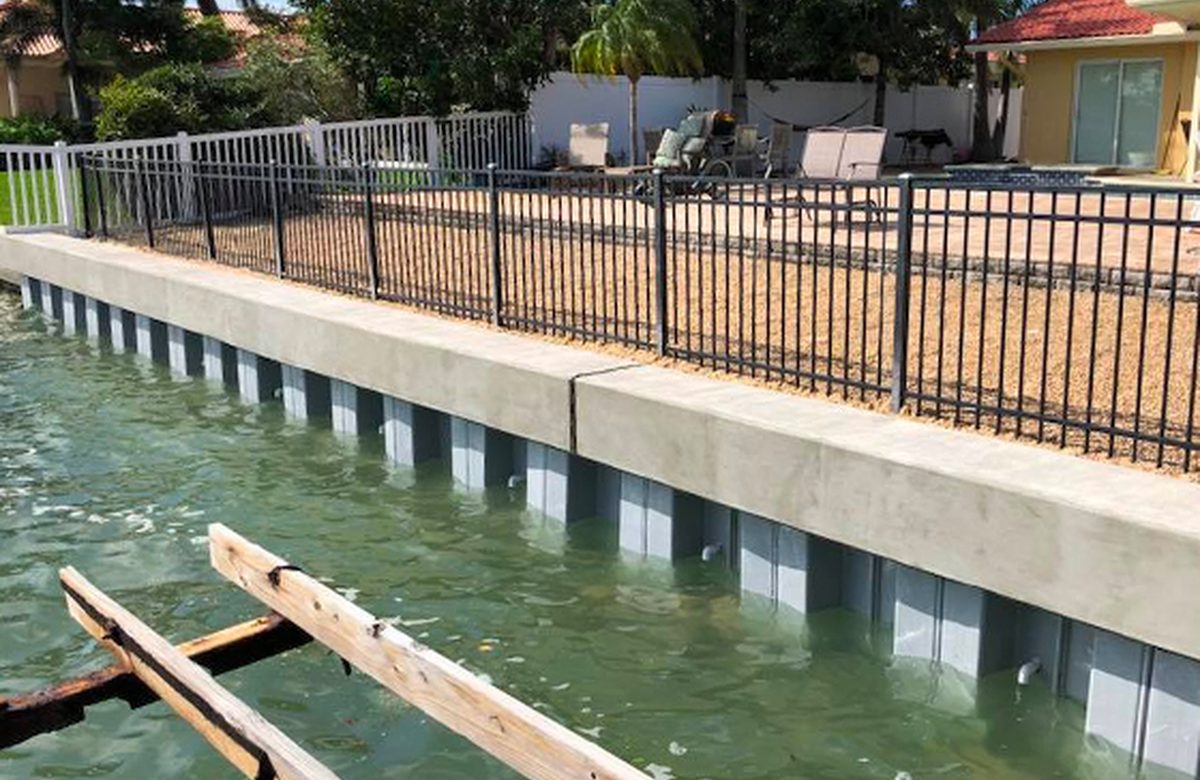
Two different owners call about their seawall. One has a wall covered in black and green streaking that looks terrible and is structurally fine. The other has a reasonably clean-looking wall with a hairline crack pattern and settling in the yard behind it, and that one needs a contractor.
Appearance is a poor guide here. This is how to tell which situation you are in.
Signs you need cleaning, not repair
These are maintenance conditions. They look bad and they are driving future damage, but the structure itself is sound.
- Green, black, or brown streaking down the wall face. This is almost always organic growth rather than staining in the concrete. It comes off.
- Barnacles and growth at and below the waterline. Normal for any wall that has not been cleaned recently.
- Slippery seawall cap, steps, or ladder. Algae. Also the most common cause of waterfront injuries, so worth dealing with promptly.
- The wall looks neglected but is straight and intact. No bulging, no stepping, no displacement.
If that is your situation, cleaning handles it, and it also stops the process that would eventually turn it into a repair.
Signs you need a marine contractor
These are structural. Cleaning will not fix any of them, and anyone who tells you otherwise is selling something.
- Cracking with displacement. Fine surface cracking is common. Cracks where one side has moved relative to the other are not.
- Spalling. Concrete flaking or breaking away, especially with rust-colored staining or exposed rebar. That staining is the corroding steel telling you where it is.
- Bulging or leaning. A wall tilting toward the water is losing the fight with the soil behind it.
- Sinkholes, depressions, or settling in the yard behind the wall. This usually means fill is escaping through the wall, which indicates a breach somewhere, often below the waterline.
- Visible gaps at the joints between panels. Panels separating is a loading problem.
- Water weeping through the face or pooling behind the wall. Could be failed weep holes, could be worse.
If you see those, the next call is a licensed marine contractor, not a cleaning service. We will tell you that directly rather than taking the job.
The grey area
Plenty of walls sit between the two, and the honest answer is that you often cannot tell until the growth is off.
This is the practical argument for cleaning first in ambiguous cases. Most owners have never actually seen their own seawall. It has been covered in growth the entire time they have owned the property, and what they are assessing is a layer of algae rather than concrete.
Once the face is clean, you can see the condition. Sometimes the answer is that the wall is in better shape than it looked. Sometimes it reveals cracking that was hidden, which is unwelcome but useful, because the alternative was finding out later and with less warning.
Either way you have made a decision with information instead of guessing.
Order of operations if you need both
If you already know the wall needs repair work, sequence matters.
Clean first, repair second. A contractor assessing a growth-covered wall is working half blind. Clean concrete lets them scope the job accurately, which usually means a tighter quote and fewer surprises mid-project.
Then maintain. This is the part that gets skipped. A repaired seawall that goes back to being permanently coated in growth starts the same deterioration cycle that produced the first repair. The repair bought you time, and maintenance is what you do with it.
What this costs you to find out
Less than guessing. A cleaning visit gives you a clean wall, before-and-after photos, and a written report on the condition of the structure, including anything our technicians observe that looks like it deserves a contractor’s opinion.
That report is useful on its own. Owners use it to decide whether to act now, to budget for work later, or to document condition before a sale. Associations and property managers keep them for maintenance records.
What we will and will not tell you
We clean seawall. We are not marine contractors and we do not perform structural repairs, which means we have no reason to find problems that are not there, and no reason to talk you out of ones that are.
If your wall needs a contractor, we will say so. If it needs cleaning and nothing else, we will say that too, including when you were expecting worse news.
We service waterfront across Pinellas, Hillsborough, and Manatee counties, for private property, condo and HOA associations, commercial frontage, and municipal structures. Read more about seawall cleaning, see how it differs by area in Snell Isle or Clearwater, or get in touch and we will take a look.