
July 29, 2026
How Long Should a Seawall Last in Tampa Bay?
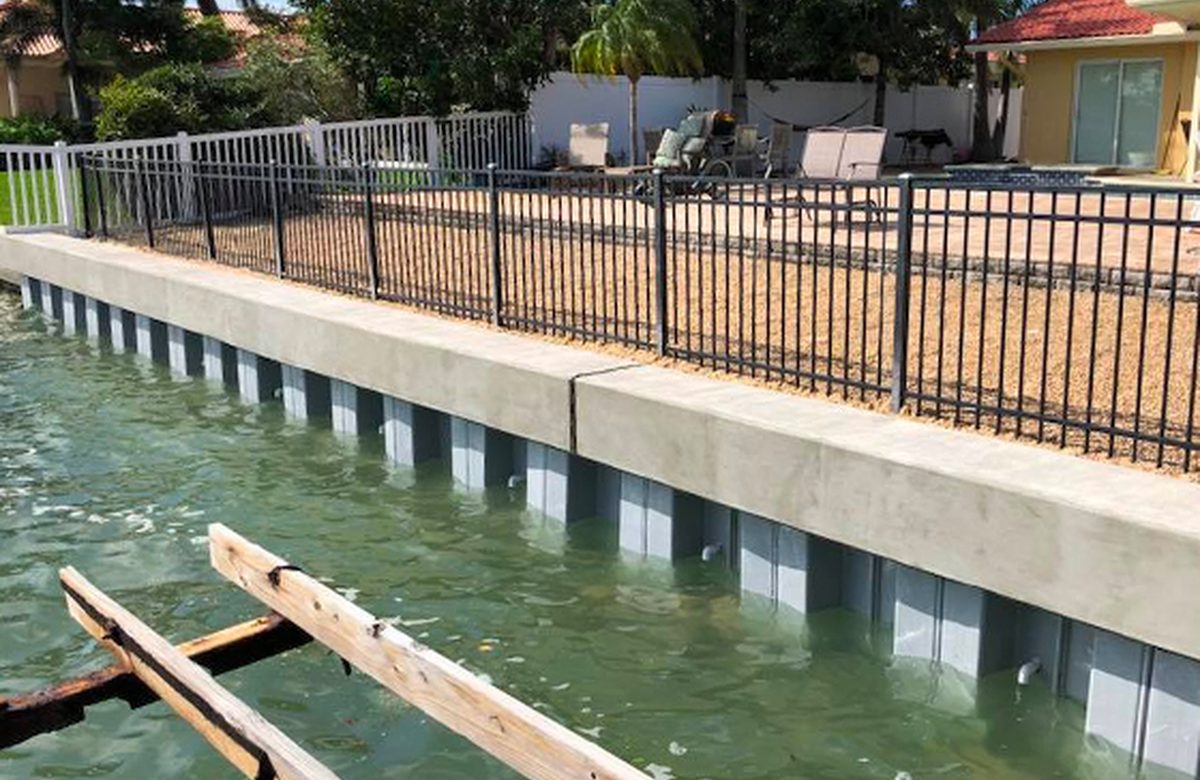
A seawall is usually the single most expensive structure on a waterfront property, and it is the one owners think about least until something goes visibly wrong. By then the conversation has moved from maintenance to marine construction.
The honest answer on lifespan is that it depends heavily on how the wall was built, what it is made of, what water it sits in, and whether anyone has maintained it. What is worth understanding is which of those you can still influence.
Why seawalls fail
Almost all concrete seawall failure comes down to one process, and it happens in a specific order.
- Moisture reaches the concrete surface and stays there. On a clean wall the face dries between tides. On a wall covered in algae and barnacles it does not, because the growth holds saltwater against the surface continuously.
- Moisture works into surface cracks. Concrete is porous and most walls have fine surface cracking long before anything looks structural.
- It reaches the reinforcing steel. The rebar inside is what gives the wall its tensile strength. Saltwater and steel are a bad combination.
- The rebar corrodes and expands. This is the part that does the actual damage. Corroding steel occupies more volume than clean steel, and that expansion pushes outward from inside the concrete.
- The wall cracks and spalls. Now you can see it. At this stage you are looking at repair rather than maintenance, and the cause has been running for years.
Notice that the visible symptom is step five. Everything that caused it happened invisibly.
What shortens the life of a seawall
Some of these you control, some you do not.
Salinity. Salt is the accelerant in this entire process. Properties near the mouth of Tampa Bay or the Gulf passes sit in higher salinity water than protected inland locations. Tierra Verde at the bay mouth is a harder environment for concrete than a sheltered bayou several miles inland, and that difference compounds over decades.
Water exchange. Canals with limited flushing hold warmer water, concentrate growth, and keep the wall face wetter. Canal frontage generally needs a shorter maintenance interval than open water in the same neighborhood.
Growth left in place. This is the controllable one. A wall that is cleaned on a schedule gets to dry between tides. A wall that is never cleaned stays wet and salty around the clock for years at a time.
Drainage behind the wall. Water pressure behind a seawall pushes outward. Blocked or failed weep holes mean the wall is fighting hydrostatic pressure it was not meant to hold continuously. This is a repair issue rather than a cleaning one, but it is worth having checked.
Original construction. Wall thickness, rebar coverage, concrete mix, and the quality of the work all set the ceiling. You inherit this one.
Storm loading. Surge events load the wall hard. A structure that has lost capacity to internal corrosion has less margin on the day it matters, which is a real consideration on the barrier islands. Property along St. Pete Beach is exposed to this in a way inland frontage is not.
What cleaning does and does not do
Being straight about this matters, because there is a version of this pitch that overpromises.
Cleaning does not repair existing damage. If your rebar is already corroding and your wall is spalling, removing growth does not reverse it. That is a repair conversation with a marine contractor.
Cleaning does interrupt the process that causes the damage. It removes what is holding saltwater against the concrete, which is the first step in the chain. On a wall that is still sound, that is meaningful protection over the decades you own the property.
Cleaning also lets you see the wall. This is underrated. Most owners have never had a clear look at their own seawall because it has been covered in growth the entire time they have owned the house. Once the face is clean you can actually assess the condition, which is useful information whether you act on it now or not.
A realistic maintenance interval
Most seawalls do well on a six to twelve month cycle. Where you fall in that range depends on your specific frontage:
- Canal and protected water, limited flushing, heavy growth: shorter interval
- Open bay with good water movement: longer interval
- Near the passes with hard barnacle growth: shorter, because hardened growth is much harder to remove once established
- Walls that have gone years without attention: longer first visit, then a normal rhythm
There is a cost argument for the shorter end that people miss. Recent soft growth comes off quickly. Growth that has been bonded to concrete for a year or more takes significantly more work. Regular cleaning is cheaper per visit, so the total cost of staying on schedule is often lower than cleaning occasionally.
For associations and commercial frontage
Condo associations, HOAs, and commercial waterfront have a second problem on top of the structural one. A streaked, growth-covered seawall reads as deferred maintenance to every resident, guest, and prospective buyer who walks past it, whether or not the structure is actually compromised.
Documentation matters here. Before-and-after photos and a written condition report give a board something concrete for maintenance records and for justifying the spend to members.
Where to start
If you do not know the condition of your wall, that is the thing to fix first. Not the wall, the not knowing.
We clean seawall across Pinellas, Hillsborough, and Manatee counties for private waterfront, associations, commercial frontage, and municipal property. Read more about our seawall cleaning, or reach out and we will look at your frontage and tell you honestly what it needs.