
September 16, 2026
The Hidden Cost of Managing Your Own Yacht
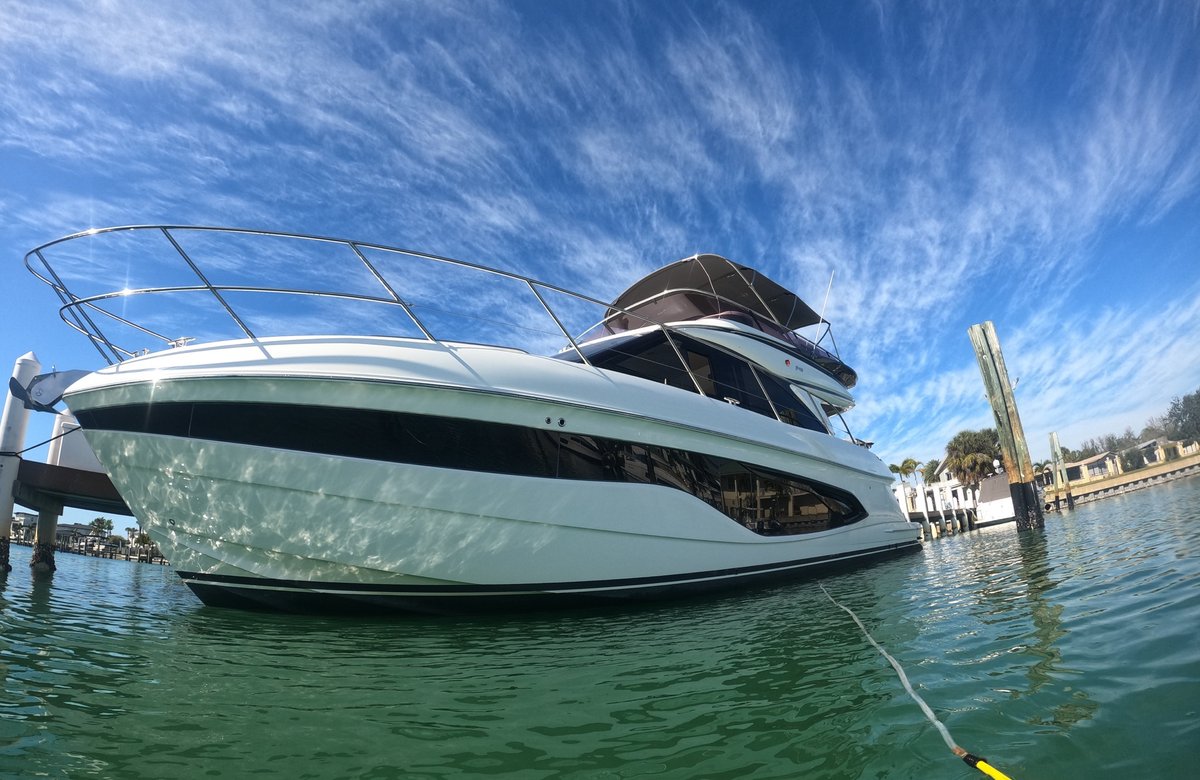
Most owners who manage their own vessel are not doing it to save money, exactly. They are doing it because it does not feel like a thing that needs managing. You have a diver, you have a guy for the engines, you call the detailer before you have guests aboard. It works.
Then it does not, and the reason it stopped working is usually not visible in any invoice.
The costs that show up on paper
These are the ones owners track, and they are the smaller problem:
- Hull cleaning and anode replacement
- Detailing and wash
- Mechanical and electrical work
- Canvas, upholstery, electronics
- Slip fees, insurance, registration
Add them up and you have the number most owners think of as the cost of ownership. Fine so far.
The costs that do not
Coordination time. Five vendors, five schedules, five follow-ups, five sets of “he said he would come Tuesday.” For most owners this is the real expense, and it is paid in weekends. Nobody invoices you for the Saturday you spent waiting on a mechanic who did not show.
Late discovery. This is the expensive one. The difference between finding a problem in week one and finding it in month four is often the difference between an adjustment and a replacement. A spent anode caught during a routine dive costs almost nothing. A spent anode found after it stopped protecting your running gear for two months is a shaft and a propeller.
Gaps between vendors. Your diver notices something about the running gear. Does your mechanic hear about it? Your detailer sees a soft spot. Does anyone follow up? With no one holding the overall picture, observations fall into the space between specialists. The owner is supposed to be the integration layer, and the owner is at work.
Deferred maintenance that compounds. Growth left on a hull is drag, and drag is fuel and engine load. Teak left unprotected in Florida sun degrades to the point where restoration takes material off permanently. Neither of these generates an invoice at the time. Both generate a larger one later.
The readiness tax. You planned a weekend on the water. You arrive and spend the first day getting the boat usable. That is not a maintenance cost on paper, but it is absolutely a cost, and for a lot of owners it is the one that eventually ends the self-management experiment.
The arithmetic nobody runs
Here is an example of how the invisible costs work, using something concrete.
Hull cleaning on a regular interval is a predictable recurring expense. Skipping cleanings to save money has three effects that do not appear as savings:
- Fuel and performance. Marine growth adds drag immediately. You pay for that on every trip.
- Harder cleanings. Soft recent growth comes off quickly. Hardened growth takes significantly more work, so the cleaning you delayed costs more than the one you skipped.
- Paint damage. Removing hardened growth is more aggressive on bottom paint than removing soft growth. You shorten the life of the coating.
The “saved” cleanings cost more than they saved, and that pattern repeats across almost every deferred item on a boat. This is not unique to hulls. It is how marine maintenance works generally.
Where location changes the math
Not every vessel faces the same version of this.
High salinity locations consume anodes faster. Vessels near the mouth of the bay or the Gulf passes burn through them at a rate that makes an annual replacement schedule genuinely risky. Tierra Verde owners who run a standard interval frequently find their anodes spent well before the calendar says they should be.
High-flow locations work dock lines and ground tackle continuously and drive harder fouling on running gear. A boat in Treasure Island near John’s Pass is in moving water constantly, and none of that wear is visible from the dock.
Barrier island vessels take relentless UV and salt spray. Gelcoat, canvas, brightwork, and upholstery degrade visibly faster on a boat kept at St. Pete Beach than the same boat kept inland. Finish protection is ongoing work there rather than an annual service.
Vessels that sit deteriorate faster than vessels that run. Fouling builds on a hull nothing disturbs, batteries discharge, seals dry, humidity works the interior. The seasonal owner who assumes an unused boat is a boat at rest is making the most expensive assumption in this article.
What management actually changes
It does not make maintenance free. The work still has to happen and it still costs money.
What it changes is the structure:
- Someone is looking at the vessel on a schedule, so problems surface early
- One point of contact holds the overall picture, so observations do not fall between vendors
- The maintenance interval is set by conditions rather than by when you remember
- Coordination time stops being yours
- The boat is ready when you arrive
For owners whose costs are mostly invoices, this may not be worth it. For owners whose costs are mostly coordination, late discoveries, and lost weekends, the arithmetic usually looks different than they expected.
Working out which you are
A reasonable test: think back over the last year and count the times something on the boat got found later than it should have, and the number of weekends you spent arranging work rather than using the vessel.
If both numbers are near zero, self-managing is working and you should keep doing it. If either one made you wince, that is the gap management fills.
Read more about our yacht management program, or tell us about your boat and we will give you an honest read on whether it makes sense for your situation.